
Raytac Corporation, a recommended 3rd-party module maker by Nordic Semiconductor, announced that MDBT42Q series module now provide a Reel Package option for customers’ selection.
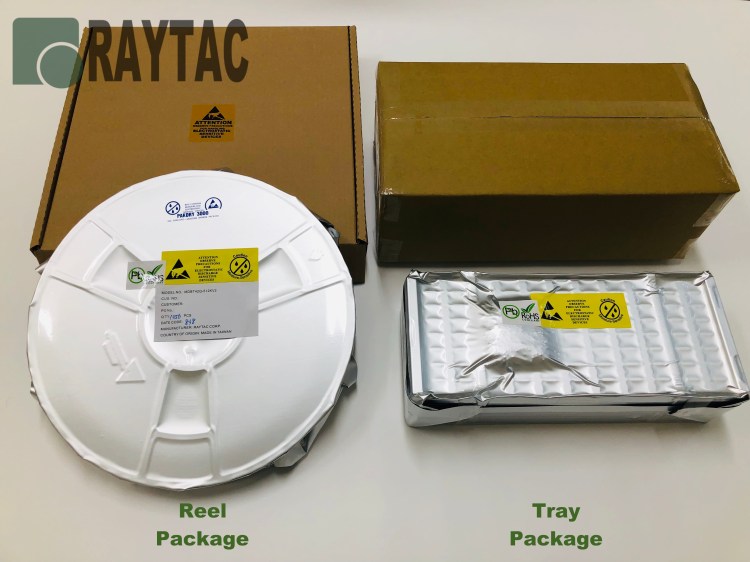

Raytac Corporation, a recommended 3rd-party module maker by Nordic Semiconductor, announced that MDBT42Q series module now provide a Reel Package option for customers’ selection.
When you start developing your firmware for your Nordic nRF52832 solution-based Raytac BLE module, you will (like on most other projects) bump into some difficulties.
The other day, we had yet another case where a simple thing caused major difficulties for even some of the brightest people – a customer couldn’t get their GPIO direction bit to work.
Although not too difficult to solve, it’s a common error that most customers end up having on our modules and that is because Pin 0.09 & 0.10 are set to NFC per Nordic’s default settings. In order to be able to use these pins as normal GPIOs, you will have to change those settings.
The two pins I am talking about are the ones linked to the NFC-part to the far left in the circuit example below:

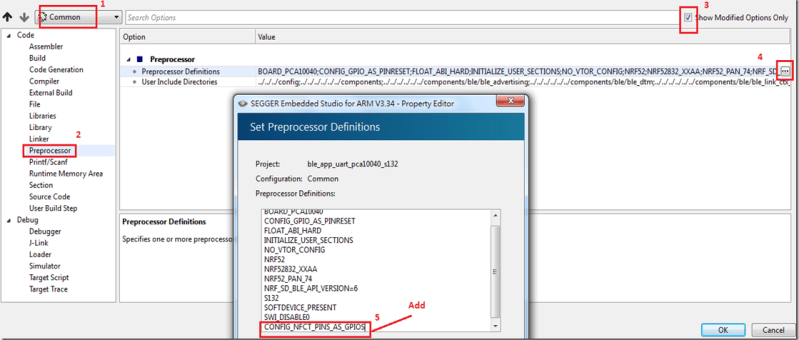
So, to convert these two pins to normal GPIOs, here’s what you need to do:
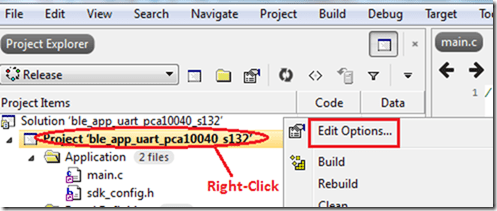
In SES, you’ll need to add CONFIG_NFCT_PINS_AS_GPIOS.

Check out the link below for a reference example on Nordic’s DevZone.
Reference link: Nordic DevZone – NFC pins into GPIOs
Setting up Nordic’s IDE (Integrated Development Environment) is the first step into Bluetooth product development, and it’s also where most developers need support.
In order for developers to be able to smoothly set up their IDE, Raytac hereby provide you with a few easy steps.
First and foremost – In terms of IDEs, there are currently four different ones that are all viable; Segger Embedded Studio (SES), Keil C, IAR and GCC. Among these, SES and GCC are IDEs free of charge while Keil C and IAR both require the developer to pay a license fee to their respective company.
We at Raytac generally recommend SES, as it is an IDE brought forth by both Nordic and Segger together and it uses Segger J-Link. Although GCC is a free IDE, it only builds code and is impractical editting make file or debugging firmware. Thus, it’s not our primary choice.
Therefore, we will hereby provide you a step-by-step guide on how to set up your IDE when using SES.
https://www.segger.com/downloads/embedded-studio/

https://developer.nordicsemi.com/nRF5_SDK/nRF5_SDK_v15.x.x/


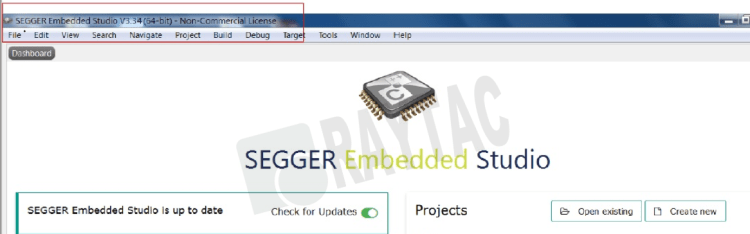
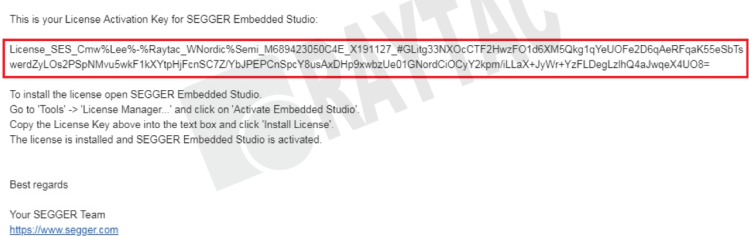
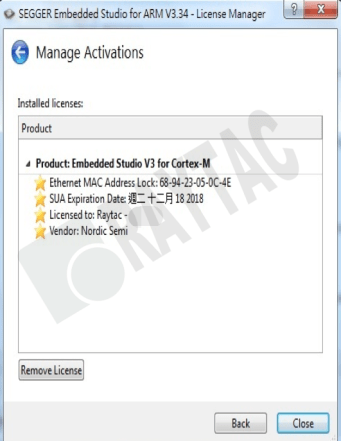
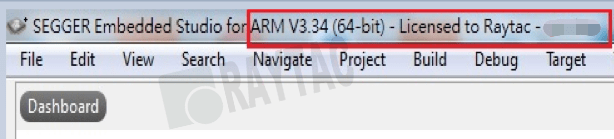
Key in Name, Company name, Address and PC’s MAC address. Then press “Request License", the “License key" will send to your mail box automatically.


Tips: How look up PC’s Mac address: Pls enter DOS mode,
Key in ipconfig/all,
The Mac address will be found in Ethernet card.

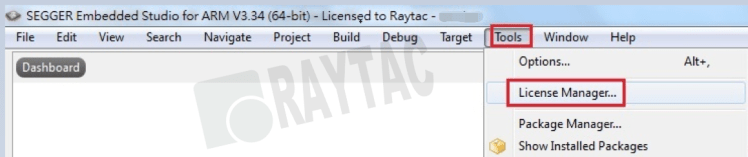
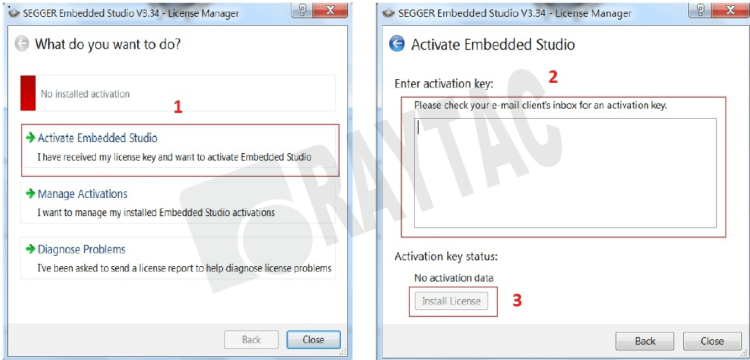
CMSIS Configuration Wizard,
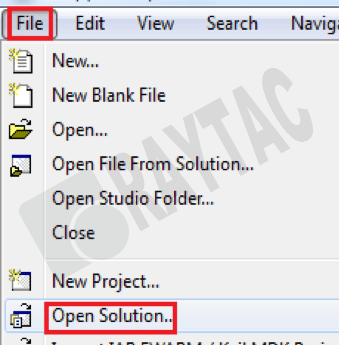
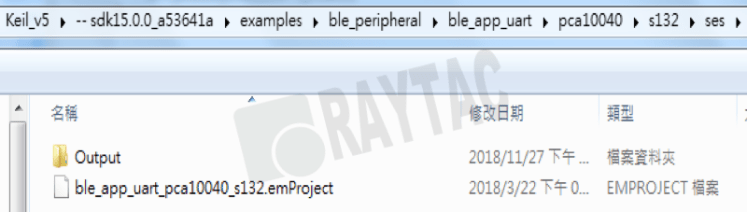
..\examples\ble_peripheral\ble_app_uart\pca10040\s132\ses\ble_app_uart_pca10040_s132.emProject


Build Code & Debug

Raytac is glad to announce that we has expanded our distributor network to CIS Countries (Russia), Ukraine, Latvia, Lithuania. The distribution agreement covers sales, marketing, and support for Raytac Corporation’s full range of Modules lines, including Nordic’s proven nRF51 Series, nRF52 Series, and nRF52840 in the territory.
PR Electronics is a Distributor of Electronic components and Modules
with offices in Russia and Belarus. The company now has 51 employees and 4 sales offices.
Key market segments: Automation, POS terminals and vending systems, Telecommunications, Security systems, Medical, Navigation.
With recent solid demand and positive feedback receiving from market, we strongly believe that IoT is the future to enhance people’s life.
With PR Electronics’s join of Raytac’s module distribution network, we truly expect he complementary of network portfolio can bring the opportunity and competitive advantage along with a speedy and convenient accessibility for developers.
PR Electronics
Contact: Pavel Lyashenko
Tel: +7 (499) 500-56-40 / Телефон/Факс: +7 (499) 500-56-40
Fax: +7 (495) 937-13-27
Email: lyashenko@premier-electric.com
Website: www.prelectro.com
Address: Andronovskoe Roadway, 26, Moscow 111024 Russia
111024 г. Москва, Андроновское шоссе 26
спецификации Bluetooth Core под версией 5
спецификации Bluetooth Core под версией 4.2
спецификации Bluetooth Core под версией 4.1
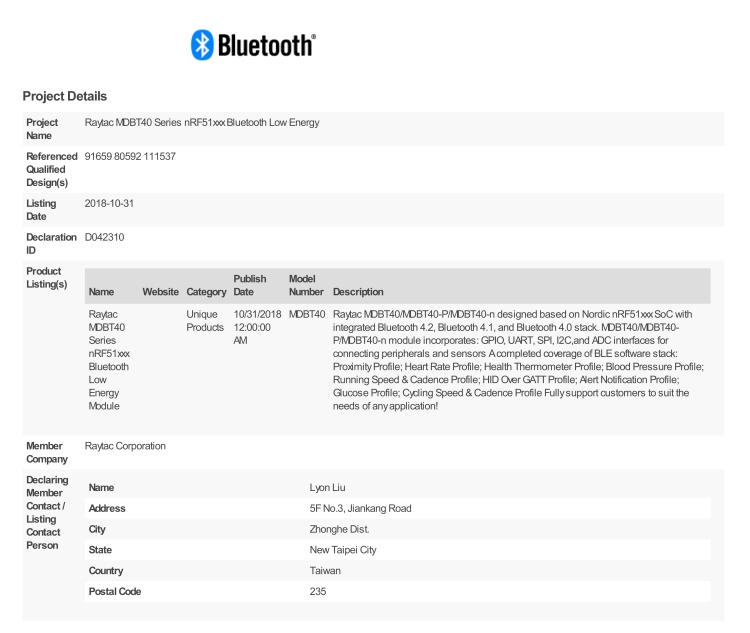
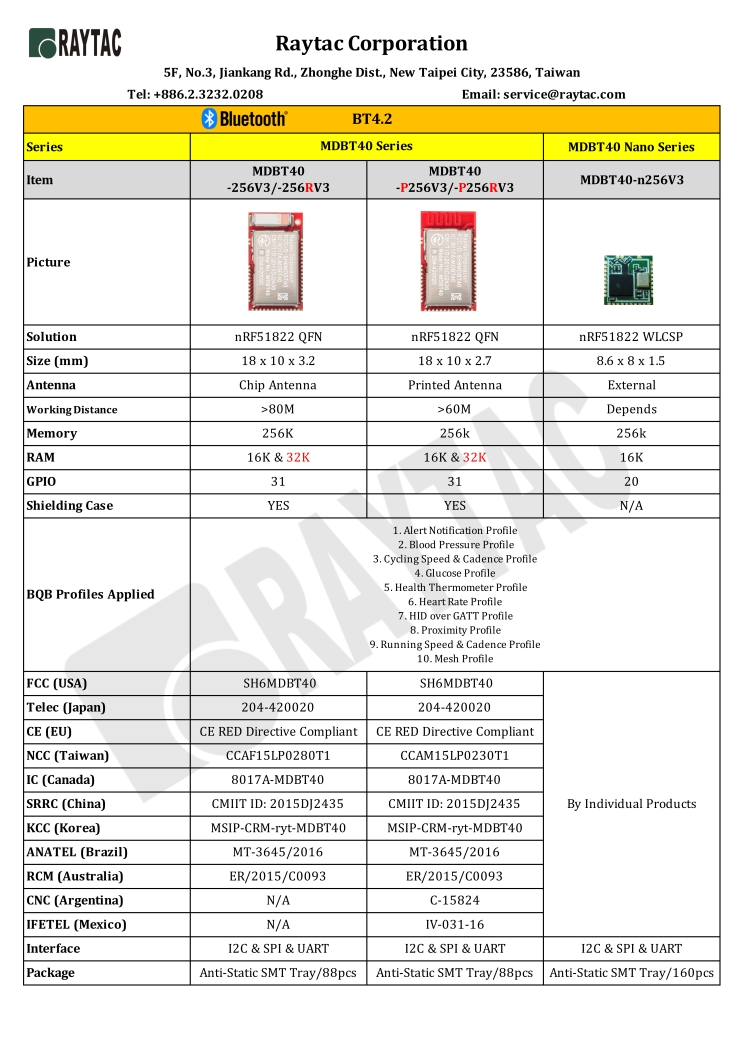
With coming depreciation and withdraw of Legacy Bluetooth Core Specification Version, BT4.1/BT4.0 has been defined to be withdraw in 1 July, 2020, which covered Nordic’s nRF51 series solution (Raytac MDBT40 series module).
To resolve this issue, Raytac has updated the MDBT40’s Bluetooth specification to BT4.2 with DID: D042310. Raytac MDBT40/MDBT40-P/MDBT40-n designed based on Nordic nRF51xxx SoC with integrated Bluetooth 4.2, Bluetooth 4.1, and Bluetooth 4.0 stack. MDBT40/MDBT40-P/MDBT40-n module incorporates: GPIO, UART, SPI, I2C, and ADC interfaces for connecting peripherals and sensors. The modules are all FCC/IC/Telec/CE/KC/SRRC/NCC/ANATEL/RCM pre-certified (MDBT40-P includes CNC/IFETEL), which can speed up customers’ easy hardware design, reduce BOM cost, and enhance Time-To-Market efficiency
The granted BT4.2 DID includes not only basic GATT, RF PHY and Link Layer, but also a completed coverage of BLE software stack: Proximity Profile; Heart Rate Profile; Health Thermometer Profile; Blood Pressure Profile; Running Speed & Cadence Profile; HID Over GATT Profile; Alert Notification Profile; Glucose Profile; Cycling Speed & Cadence Profile ; Mesh Profile which fully support customers to suit the needs of any application!
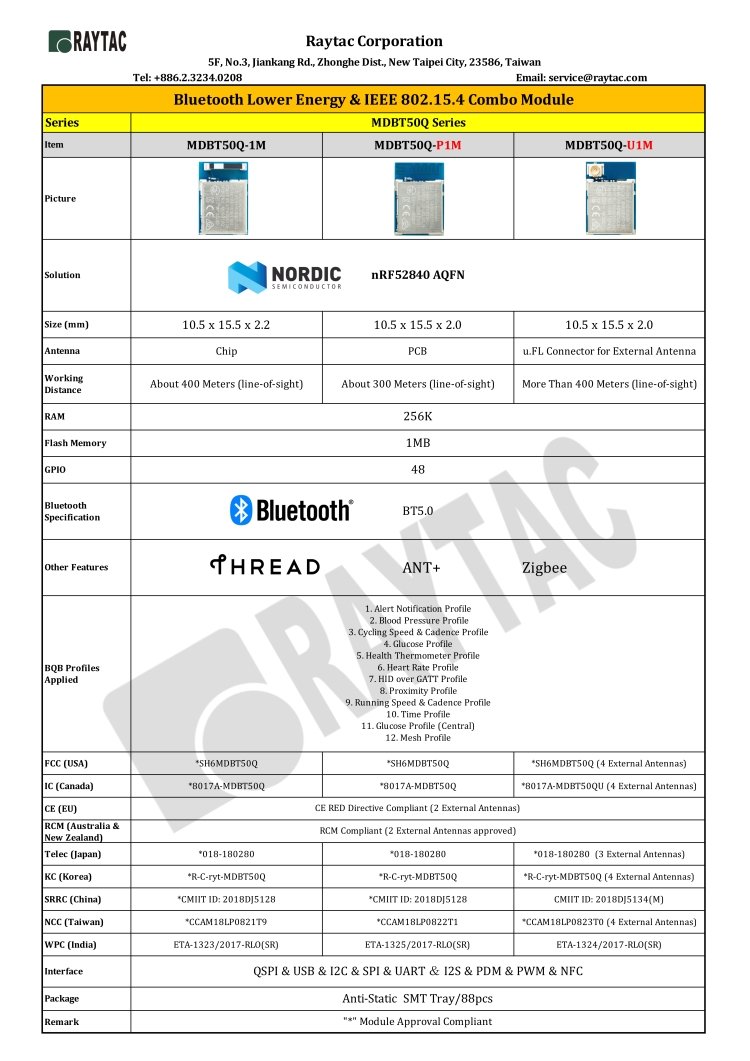
Raytac would like to announce MDBT50Q series Bluetooth Module which deployed Nordic nRF52840 solution have WPC (India) certificate granted.
We believed it will help Indian customers breakthrough to Bluetooth world with Raytac WPC certified nRF52840 modules.

Raytac’s AT command central role module, deploys Nordic nRF52832 solution.
There are 2 major features which has drawn developers’ dramatic attention.
Which are:
1. Supports scanning other makers’ AT command peripheral module as long as based on peripheral’s UUID/TX/RX character can be matched.
2. Supports scanning Beacon company ID/UUID (31 bytes Beacon)


AT command module, an easy solution provides developers a quick breakthrough to Bluetooth connection. Without firmware effort needed, simply have commands setting on MCU and the start to enjoy the implement of bridging connectivity between devices through Bluetooth.

After Raytac’s Peripheral (Salve) role AT command module released, the demand of Central role has been highlighted by developers.
To have a completed solution, Raytac today announced Central role, as known as Master, AT command module released.
Part No.:
MDBT42Q-ATM (Chip Antenna Version)
MDBT42Q-PATM (PCB Antenna Version)
Specification Download (Please Click Me)
Differ from Peripheral role AT command module built by nRF52810 solution, Central role AT command module deployed Nordic nRF52832 which employees 64K RAM and 512K Flash Memory.
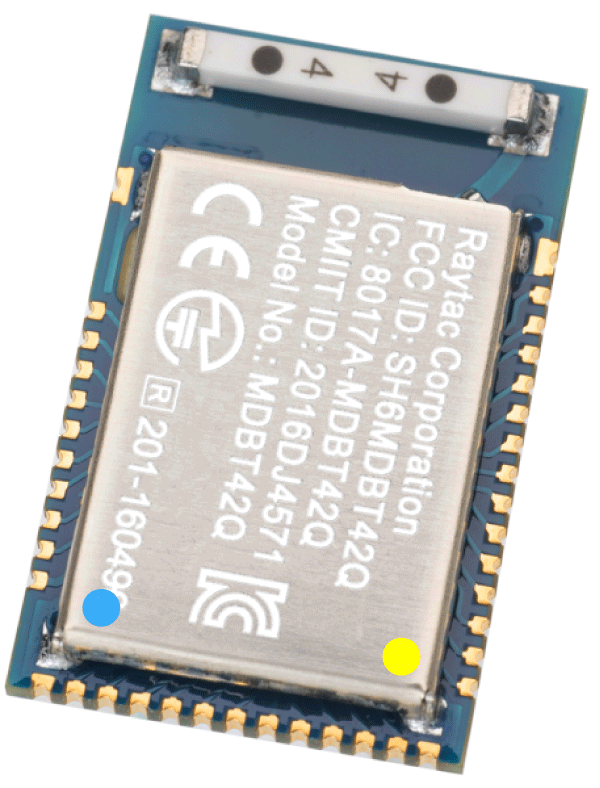
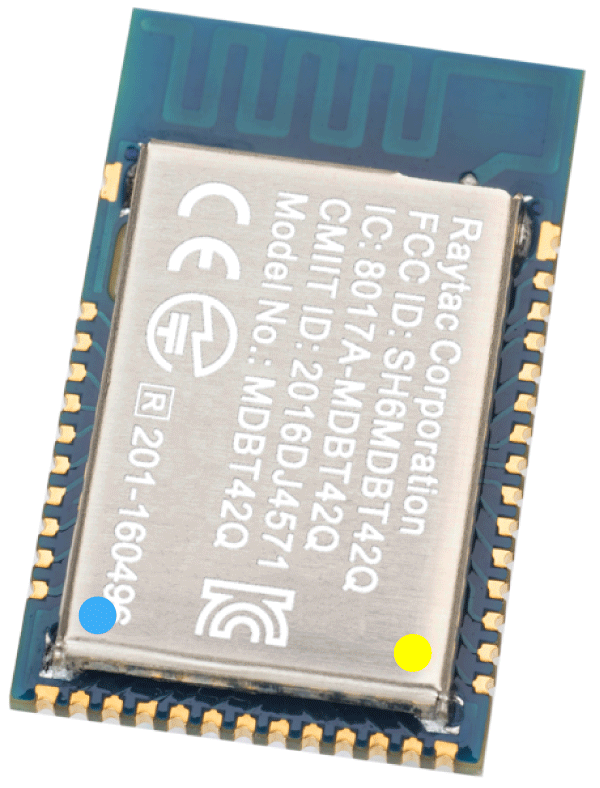
Bluetooth SIG announced the deprecation and withdrawal of older versions of the Bluetooth Core Specification.
Bluetooth SIG has policy in place to introduce the deprecation and withdraw process for older testing specification, listing procedure and core specification.
For core specification placed into withdrawn status, it will not be allowed to use the withdrawn version anymore. Any product wishes to qualify the Bluetooth Design under this deprecated version must pay additional deprecation fee.
Please refer to the revised plan and schedule summarized as below,
1.Withdrawal of the following on January 1, 2019:
Bluetooth Specification Version 2.0 + EDR
2.Deprecation of the following on January 1, 2019 and withdrawal on July 1, 2020:
Bluetooth Specification Version 2.1 + EDR
Bluetooth Core Specification Addendum 1
Bluetooth Specification Version 3.0 + HS
Bluetooth Specification Version 4.0
Bluetooth Core Specification Addendum 2
Bluetooth Core Specification Addendum 3 revision 2
Bluetooth Core Specification Addendum 4
Bluetooth Specification Version 4.1
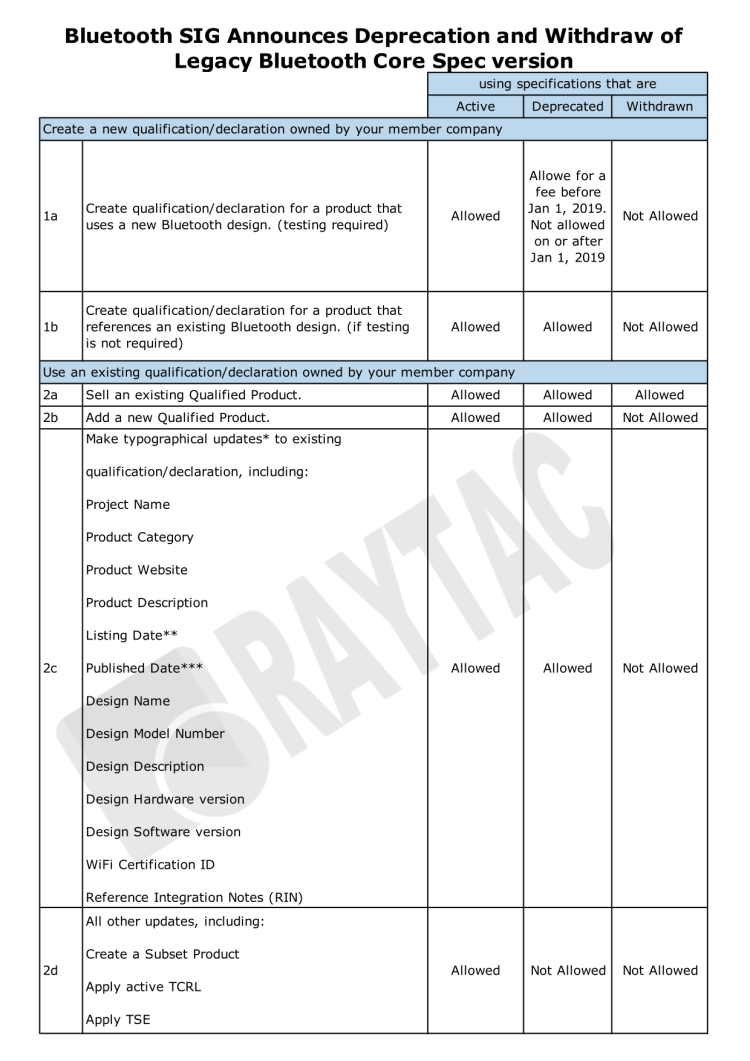
Nordic’s information about Bluetooth Core Specification’s Impact!
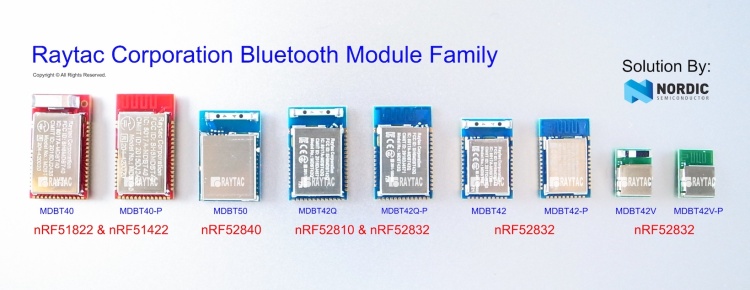
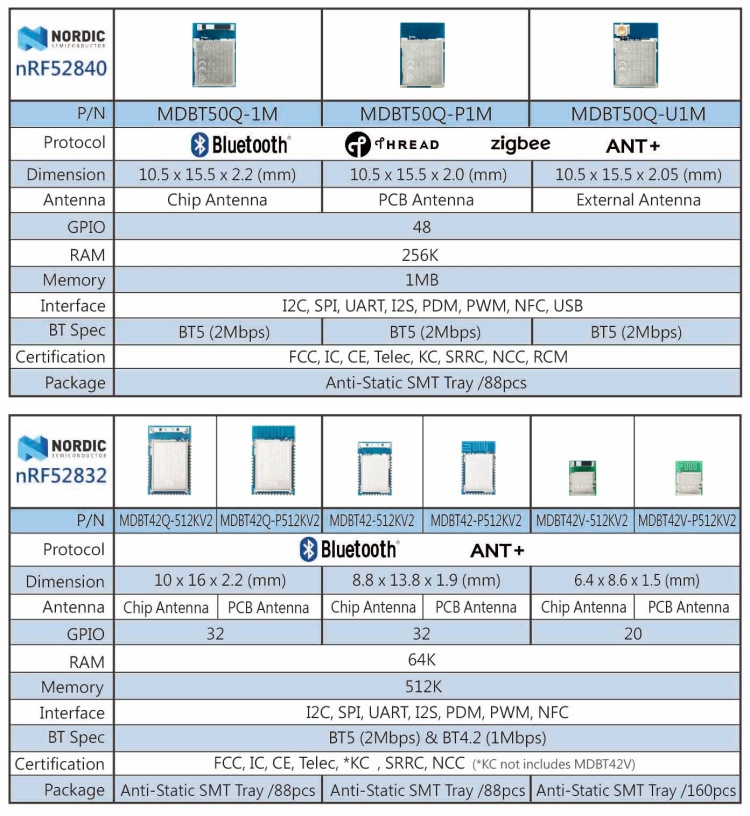
After Nordic released nRF52840, the confusion raised what the difference between nRF52832. Raytac provided an easy comparison chart based on module solution hopes to provide a quick understanding in between.
 Raytac Corporation