Raytac Corporation is excited to extend our warm welcome to you once again at Embedded World 2024, scheduled to be held from April/9/2024 to April/11/2024 at the Nuremberg Exhibition Centre, Germany.
As IoT and Bluetooth Low Energy gain momentum, they emerge as essential catalysts for future development. Following Nordic Semiconductor’s lead in wireless technology, Raytac remains committed to releasing a wide range of modules to meet developers’ needs.
This year, we’re also introducing Wi-Fi modules AN 7002 alongside the nRF 7002 and nRF 54 series modules, so stay tuned for what’s to come.
Based on your requirements, we will showcase more applications of modules at the exhibition, as well as demonstrate how Raytac Corporation can save your time and expenses during the development stage and overall costs.
Raytac Corporation is delighted to invite you joining our team at:
HALL 3 Booth 3-111 M2M Area
To be a part of this dynamic convergence of ideas, innovations, and opportunities.
For more information and details into Raytac Corporation at embedded world 2024 can now be found in the preview of our digital event platform from following link:
After reading through the article of WFA (Wi-Fi Alliance) QuickTrack program, you may try to seek for a seamless option that least effort made for a Wi-Fi certificate.
Raytac Corp. has took this Wi-Fi program topic into consideration already!
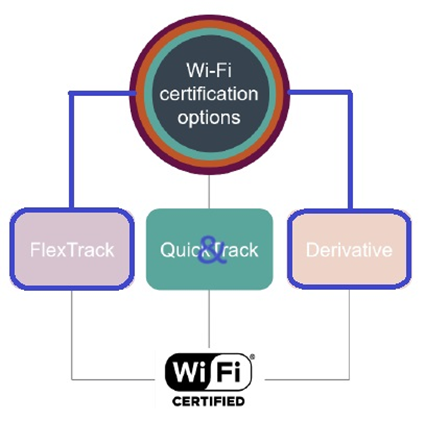
Raytac Corp. is working on the FlexTrack package as a source product so that end product developer can apply a Derivative program to grant a WFA(Wi-Fi Alliance) certificate by leveraging Raytac Corp. WFA source product – NRF5340 & nRF7002 IC combo solution (MDBT53 & AN7002Q Module)
Let Raytac Corp. do the work ahead of your request, the FlexTrack program is provided with a fix option, the necessary Wi-Fi compliance & conformance have been done by Raytac Corporation, Raytac Corp. will get a WFA Certificate that you (end product developer) can simply leverage it and apply Derivative program seamlessly for getting your own Wi-Fi certificate ID as long as you’re the member of Wi-Fi alliance.
What benefits you (end product developer) by sticking to Raytac Corp. FlexTrack (Source product) program?
No-Testing required: Raytac Corp. has granted the Wi-Fi certificate ID using source product (MDBT53 & AN7002Q Module) , you simply leverage Raytac Corp. Wi-Fi certified ID and apply the solution to your end product when you’re working on the certification process ; No-testing is required.
Faster time-to-market end device (WiFi) : By using Raytac Corp. available WFA source product , you can get through the certification process easily without being in the process of a series of tests as long as you’re the member of Wi-Fi alliance. This helps your WiFi end device get launched at the earliest.
Seamless Connectivity & Least resource required : Without involving in a series of complicate Wi-Fi compliance and conformance test, it delivers the seamless connectivity and the least effort would be took for end product developer to get Wi-Fi certificate ID.
Waive cost on Wi-Fi conformance test: it significantly decreases the cost for your project budget without getting through a series of Wi-Fi compliance & conformance tests.
If you stick to Raytac Corp. combo solution (source product )- MDBT53 & AN7002Q Module, given the WiFi components are pre-certified in the FlexTrack solution, you (end product developer) will be able to use the minimal resource and least effort to get Wi-Fi certificate ID for your WiFi end device.
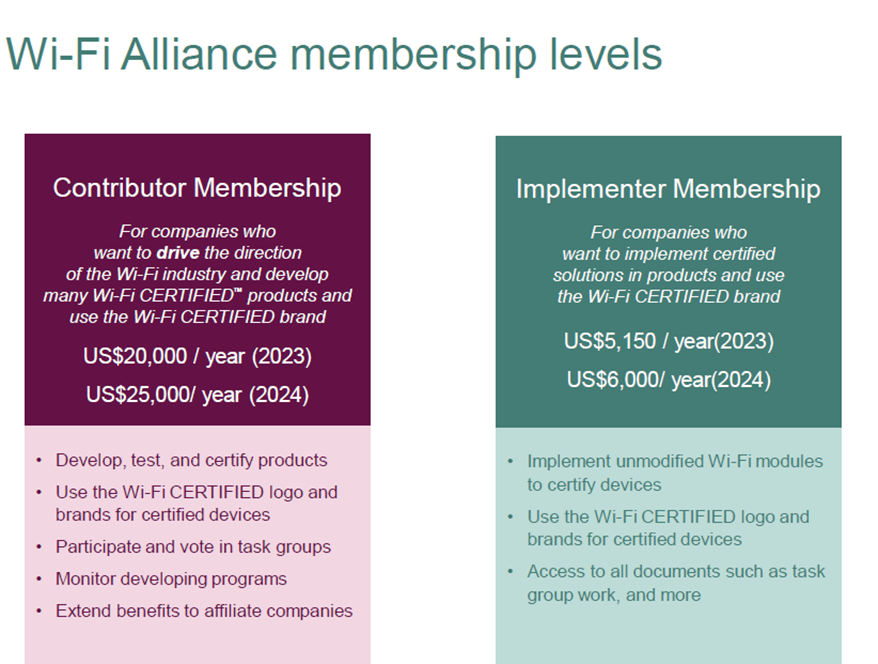
Which membership level shall be applied in Wi-Fi alliance for being Derivative?
If you agree with Raytac Corp. FlexTrack program and are confident in the Raytac Corp. combo solution(source product )- MDBT53(Raytac Bluetooth Low Energy Module) & AN7002Q( Raytac Nordic Wifi Module) , Wi-Fi Implementer membership would extend this benefit for you. Being the Implementer membership and participate in the Derivative program, this is the perfect option for the budget sensitive company.
In Nordic Semiconductor products, the enhanced APprotect feature has been integrated into the nRF52 series microcontrollers. APprotect (Access Port Protection) is a crucial security feature designed to safeguard the device’s application, compiled code, with read-back protection mechanism, against unauthorized access and modifications. This protection is essential for preventing unauthorized access and software tampering.
Effectively leveraging the improved Approtect feature on nRF52 series microcontrollers to enhance device application security and reliability is a significant concern for current developers and engineers.
This year, Raytac Corporation has launched low-energy Bluetooth modules for the third edition IC nRF52840 APprotection Solution and nRF52832 APprotection Solution.
These modules not only retain the functionalities of the original nRF52840 and nRF52832 low-energy Bluetooth modules but also comprehensively upgrade security by adding the APprotect feature to prevent hackers from accessing and rewriting programs without authorization.
Here is a detailed explanation of the nRF52 third edition low-energy Bluetooth modules by Raytac Corporation:
Raytac Corporation APProtection Bluetooth Module Series:
The encoding principle is to use ‘EN’ after the original model number to represent ‘encrypted’ instead of ‘V2’.
For example, in the nRF52840 series, the Raytac model MDBT50Q-1MV2 has “V2″ replaced with “EN" for the third edition, hence the third edition model is named MDBT50Q-1MEN.
MDBT50Q Ceramic Antenna Series:
MDBT50Q-1MEN : Equipped with a ceramic antenna module suitable for long-distance or complex environment wireless transmission.
MDBT50Q-P PCB Antenna Series:
MDBT50Q-P1MEN: Equipped with a PCB antenna module suitable for general environment wireless transmission.
MDBT50Q-DB: An excellent choice for those who want to delve deeper into and conduct more tests with the Nordic nRF52840. This development and debugging board based on the MDBT50Q-1MV2 (ceramic antenna) module has all GPIOs of the module pulled out, facilitating rapid connection to other devices for firmware development and verification using jumper wires.
The same encoding principle applies to the nRF52832 series, and the MDBT42Q series follows suit.
MDBT42Q Ceramic Antenna Series: MDBT42Q-512KEN comes with a ceramic antenna module, suitable for long-distance or complex environment wireless transmissions.
MDBT42Q-P PCB Antenna Series: MDBT42Q-P512KENfeatures a PCB antenna module, suitable for general environment wireless transmissions.
MDBT42Q-U512KEN , designed for external antenna requirements, comes with a u.FL connector module suitable for ultra-long-distance wireless transmissions.
MDBT42Q-DB development board is based on the MDBT42Q-512KV2 (ceramic antenna) module and is designed for development and debugging purposes.
Other Reference Links:
Nordic 3rd Party Modules/Modems(Raytac’s modules are all qualified Nordic 3rd Party Bluetooth low energy module, please go following website for more detailed information.)
Module Appearance: The third edition features an additional black dot in the bottom left corner of the metal shell for easy identification of its purpose.
While the device with readback protection enabled, issuing ERASEALL command is a must and the only method to unlock the device before proceeding with programming.
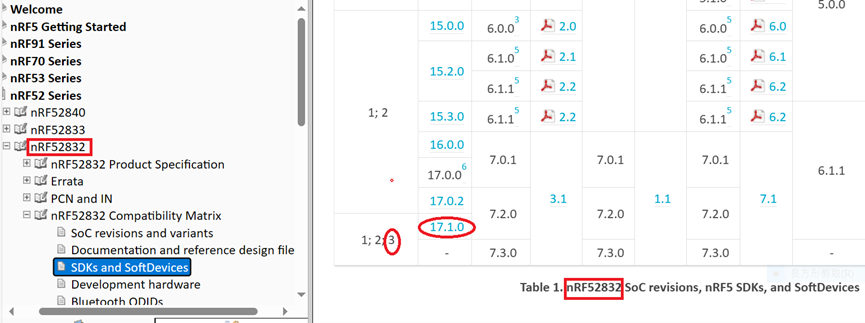
It is recommended to use nRF_SDK v17.1.0 or later versions to write code for the third edition.
For further clarity on the differences between the second edition IC Bluetooth modules and the third edition IC Bluetooth modules, the following table and links are provided for reference:
Nordic nRF52840 * Supporting BT5 Long Range Feature * Built in USB interface
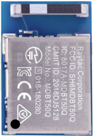
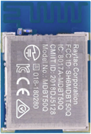
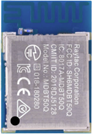
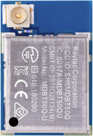
Raytac nRF52840 module spectrum covers MDBT50Q-1MV2, MDBT50Q-P1MV2 and MDBT50Q-U1MV2 series with Chip Antenna, PCB Antenna and u.FL connector for External Antenna option for selection.
Raytac Corp. is officially a member of Wi-Fi Alliance now!
Before stepping into Wi-Fi module selection and adoption, Wi-Fi regulatory compliance will be essential for you to know.
Let’s dig into the Wi-Fi certification program and investigate the possibility of WFA Qualified Solution (provided by Solution Provider) & WFA certificate (obtained by end product developer).
What benefits you (end product developer) by working with Rayta Corp. (Solution Provider) for QuickTrack program?
Faster time-to-market : By using available WFA Qualified Solution (provided by solution provider) to waive (or partially waive) compliance test criteria/decrease testing days for end product (WiFi Device), shorter development days would be took before product launch.
Reduce test and certification costs: it significantly reduces the cost and certification days for your project with minimal resource by working with Raytac Corp. (Solution Provider) using available WFA Qualified Solution.
Avoid testing redundancies: Raytac Corp. (Solution Provider) has pre-certified the core Wi-Fi architecture and protocols in Nordic WiFi module AN7002Q, the necessary qualification tests has been conducted. You (end product developer) don’t need to test on those same criteria for end product (WiFi Device) if Raytac WiFi module is implemented in your end device.
Allow flexibility of Wi-Fi functionality change: In case those minor change of Wi-Fi feature which is not relates to core/essential/architecture change may be raised someday in the future , QuickTrack program delivers the qualified product base (Source product) and lower cost with conformance test (QuickTrackTool) responding to the minor change.
How QuickTrack certification program works?
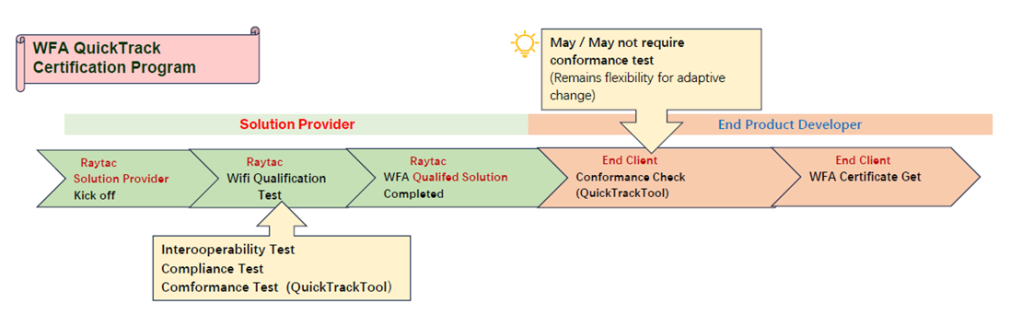
QuickTrack certification program shall be completed by 2 different parties, one is solution provider and the other is end product developer.
(Refer to the following image)
As a Solution Provider, Raytac would proceed the essential and fundamental Wi-Fi protocol/compliance test and develop this into a Qualified solution so that end product developer can leverage this solution as a base (Source Product) to obtain a certificate entitled to end product developer.
Please note the conformance check (named QuickTrack Tool) would be required before Wi-Fi alliance certifies the application.
Conformance check (QuickTrack Tool) will be reviewed for the 8 Wi-Fi components.
Chipset
Wi-Fi Component Firmware Version
Driver
RF Architecture
Wi-Fi Component Operation System
Physical Interface
RF Components
Antenna
When you adopt Raytac WFA Qualified solution, the core/essential/architecture components are pre-certified in the solution, in most of cases, no further conformance test is required, you (end product developer) will be granted to obtain the certificate after a couple of days applying process.
Raytac leaves the right to Wi-Fi alliance for the conformance review (run QuickTrackTool).
Which membership level shall be applied in Wi-Fi alliance for being QuickTrack?
If you agree with QuickTrack program and are willing to participate in the partnership as end product developer with Raytac Corp. (solution provider), Implementer membership will be cost effective option for you.
Company like Raytac Corp. served as solution provider or require professional Wi-Fi alliance support, company own/multiple programs oriented or needs tasks management shall refer to the membership of top one – Contributor.
Bluetooth modules typically have options for a 32MHz Internal Oscillator (or some called internal crystal oscillator) and a 32.768KHz External Oscillator. The choice between the two is often influenced by specific application requirements, power consumption, accuracy, and cost considerations. Here are some basic differences between Internal and External Oscillators:
Internal Oscillator: (32MHz)
Function: The internal oscillator is embedded within the module and generates the clock signal for the Bluetooth module. This internal oscillator is typically smaller, lightweight, and reduces dependence on external components.
Advantages: Simplifies design, saves space, and reduces costs.
Disadvantages: Some applications may require higher clock stability, which the internal oscillator may not provide to the desired level of precision.
External Oscillator: (32.768KHz)
Function: An external oscillator is an independent oscillator externally connected to the module, offering higher clock stability and accuracy.
Advantages: Provides higher clock stability, suitable for applications with stricter timing requirements.
Disadvantages: Requires additional components, may occupy more space, and increases costs.
Criteria for choosing Internal or External Oscillator:
If the application has modest clock precision requirements, and cost and space are critical factors, choosing the internal oscillator may be suitable.
If the application demands higher timing precision, an external oscillator should be considered for its enhanced clock stability.
Benefits from switching between external and internal oscillator:
Increased Performance Requirements: If the application’s performance requirements increase, a higher-precision oscillator, such as an external oscillator, may be needed.
Insufficient Clock Stability: If timing stability issues arise during Bluetooth communication, upgrading to an external oscillator can provide better clock stability.
Followings are the instructions we can use to switch between internal oscillator and external oscillator for nRF5 SDK (v17.10) and NCS SDK (v2.5.2).
Keil (Keil μVision) and SES (Segger Embedded Studio) are another method commonly used Integrated Development Environments (IDEs) in the field of embedded systems development.
Choosing to use the internal crystal oscillator requires program modifications. Please refer to the following instructions for making these changes in the Keil and SES development environments.
Raytac Corporation, a globally recognized third-party Bluetooth module supplier endorsed by Nordic Semiconductor, has announced a strategic collaboration with Millennium Semiconductor, a specialized electronic agent, starting from November 2023. The establishment of this partnership aims to jointly expand into the Indian market and provide comprehensive services to customers in different regions. Raytac Corporation has consistently focused on the wireless field, earning a reputation as a leading provider of Bluetooth Low Energy modules with outstanding technological capabilities. Additionally, Raytac offers the latest WiFi + BLE modules and a complete range of solutions from Nordic.
The product lineup includes series such as nRF54, nRF5340, nRF52840, nRF52833, nRF52832, nRF52820, nRF52811, nRF52810, nRF52805, nRF51822, all of which have obtained qualifications for BT5.4, BT5.3, BT5.2, and BT5.1. Furthermore, the nRF7002 represents the first device in our array of distinct Wi-Fi products, seamlessly combining with Nordic’s established ultra-low power technologies. Raytac Corporation’s modules have received Bluetooth (QDID/DID/BQB) and regulatory certifications from various countries and regions, including FCC (USA), CE (Europe), IC (Canada),TELEC (Japan), KC (Korea), SRRC (China), NCC (Taiwan), RCM (Australia/New Zealand), and others.
In addition to delivering excellent performance and transmission distances, Raytac Corporation’s modules are relatively compact in size, offering a diverse range of module series choices. This flexibility empowers developers to design without being constrained by module dimensions. Furthermore, the inclusion of AT Command by Raytac facilitates a quick entry for developers into the realms of Bluetooth and the Internet of Things.
Millennium Semiconductors India Private Limited,
17/18/19, 2nd Floor, Mahalaxmi Heights, Mumbai-Pune Road, Pimpri, Pune 411 018, Maharashtra, INDIA.
AT commands play a crucial role in wireless communication, IoT, and embedded systems.
This guide aims to assist developers in creating an appropriate environment for efficient AT command usage, ensuring smooth communication and application operation.
SRRC, or the State Radio Regulation Committee, is a mandatory certification required by the National Radio Management Committee of the Ministry of Industry and Information Technology of China. All wireless products sold within China must obtain certification, commonly referred to as SRRC certification, which involves approval of the wireless transmission equipment model.
SRRC Document No. 129:
Document No. 129 introduces various interference avoidance technical requirements for wireless transmission equipment, including “pre-transmission scanning," “monitoring and avoidance," and “Medium Utilization (MU)" for equivalent occupancy rate.
a. “Pre-transmission scanning" and “monitoring and avoidance" mechanisms involve monitoring and listening to the wireless channel before or during signal transmission. By setting appropriate detection threshold levels, the channel’s occupancy status is determined to select an idle channel for access.
b. The “equivalent occupancy rate" mechanism requires wireless transmission equipment to self-adjust based on parameters such as “Duty Cycle" and “transmission power," ensuring the “equivalent occupancy rate" remains at a lower level (not exceeding 10%).
1. Certificate Validity Period: Enforced from October 15, 2023. During this period, both old and new policies can be applied. Certificates obtained under the old regulation (Document No. 353) are valid until December 31, 2025. However, certificates obtained by complying with the requirements of Document No. 129 will be valid for 5 years.
2. Sample Requirements: 2.1 The quantity of conducted samples prepared according to the old regulation remains unchanged: 5 samples. 2.2 The major change introduced by Document No. 129 is the addition of interference avoidance technical requirements. The interference avoidance test items include: 1. Maximum channel occupancy time 2. Minimum channel idle time 3. Minimum silence period duration 4. Detection of unused signals 5. Detection threshold 6. Short control signal duty cycle 7. Equivalent occupancy rate.
Thread Group(https://www.threadgroup.org/)Founded on July 15, 2014 by Apple, Amazon, Google and six companies member. As a non-profit organization, Thread Group focuses on promoting the application of Thread in the field of Internet of Things, training developers and consumers, introducing thread technology and its advantages, and providing strict product certification tests to ensure the optimized user experience.
What is Thread?
Thread is a secure wireless mesh networking protocol. Thread solving new needs that in building a network of smart home products. Thread is based on 6LoWPAN of structure, making full use of open standards and IPv6 technology. Compared with other wireless standards, Thread has many technical advantages: safe and reliable, no single point connection failure in network, more simple connection, and low power consumption. Product developers and consumers can easily and securely form more than 250 devices into a low-power wireless Mesh network through Thread, and each device in the network can connect to the Internet and access cloud services. The Thread protocol stack is an open standard built on a series of existing standards of the Institute of Electrical and Electronics Engineers (IEEE) and the Internet Engineering Task Force (IETF), rather than a new standard (see the figure below).
Figure 1. Overview of the Thread protocol stack
General characteristics of Thread
The Thread protocol stack supports IPv6 addresses, and it can realize low-cost bridging with other IP networks. It is the best choice for low-power/battery-powered operation and communication between wireless devices. The Thread protocol stack is designed for smart home and business applications based on IP networks and can be matched with various application layers on the protocol stack.
The general characteristics of the Thread protocol stack are as follows:
• Simple and convenient network installation, start-up, and operation: Thread protocol stack supports various network topologies. It can be installed via smartphone, tablet or computer, and the installation is simple and convenient. Product installation codes ensure that only authorized devices can join the network. When arise out of routing problems, simple protocols for building and joining networks enable the system to configure itself and fix those problems.
• Security: Devices cannot join the network unless authorized, and all communications are encrypted and protected. Security protection can be used at the network layer as well as at the application layer. All Thread networks are encrypted with an authentication scheme and Advanced Encryption Standard (AES). The Thread network is more secure than any other wireless network the Thread Group has evaluated.
• Can accommodate the needs of home networks of various sizes: The number of devices in different home networks varies greatly, ranging from a few to hundreds. Network layer design aims to optimize network operation for its intended use.
• Applicable to large commercial networks: For large commercial networks, a single Thread network is not enough to meet the requirements of all applications, systems and networks. The Thread domain model allows scaling up to 10,000 Thread devices in a single deployment, achieved through the combined use of different connectivity technologies (Thread, Ethernet, Wi-Fi, etc.).
• Two-way communication for service discovery and connection: Multicast and broadcast are inefficient for wireless mesh networks. For communication with the outside world of the Mesh network, Thread provides a communication registration service, and the device can register whether it is available and whether it can provide communication services, and the client can use unicast queries to find registered services.
• Wide coverage: The coverage of a typical Thread device is usually sufficient for the average household. A design with a power amplifier can greatly improve coverage. In the physical layer (PHY), the distributed spread spectrum technology can better improve the anti-interference ability. For commercial networks, the Thread domain model allows multiple Thread networks to communicate with each other through the backbone network, so it can be expanded to cover multiple Mesh subnets.
•Designed with no single point of failure: The Thread protocol stack is designed to operate safely and reliably, even in the event of a single device failure or absence. Thread devices can also incorporate IPv6-based links (such as Wi-Fi and Ethernet) into the topology to reduce the possibility of multiple Thread partitions. This allows Thread devices to take advantage of the higher throughput, greater channel capacity and wider coverage of these infrastructure links, while still supporting low-power devices.
• Low Power Consumption: Devices communicate efficiently and have an expected lifetime of several years under normal battery usage, resulting in an improved user experience. With the right duty cycle, the device can typically run for years on AA-size batteries.
• Cost-effective: Compatible chipsets and software stacks from multiple vendors are priced for mass deployment and designed for ultra-low power consumption.
Thread home network architecture
Users communicate with the home Thread network via Wi-Fi on their home area network (HAN) or from their own device (smartphone, tablets or computer) using a cloud-based application. The figure below illustrates the main device types in the Thread network architecture.
Figure 2. Thread home network architecture
• Border Router: supports the network connection between the 802.15.4 network and other adjacent physical layers (Wi-Fi, Ethernet, etc.). The border router provides services for devices in the 802.15.4 network, including routing services and service search in the case of offline operation. There can be one or more border routers in a Thread network.
• Leader: located in the Thread network, responsible for managing the allocation and registration of router IDs, and accepting requests from terminal devices (REEDs) that meet the requirements of routers to become routers. The Leader decides which devices should be routers, and, like all routers in the Thread network, the Leader can also have sub-devices. Leader also assigns and manages router addresses through CoAP (Constrained Application Protocol). However, all information contained in the Leader is also stored in other Thread routers. Therefore, if the Leader fails or loses connection to the Thread network, another Thread router can be elected as the Leader without user intervention.
• Thread Router: Provides routing services for network devices. Thread routers also provide joining and security services for devices attempting to join the network. Thread routers cannot sleep and can also be REED by downgrading their functionality.
• REED: It can be a Thread router or a Leader, but not necessarily a border router with special attributes (such as multiple interfaces). Depending on the network topology or other specific circumstances, REED cannot be a router. REED does not relay messages, nor does it provide joining or security services to other devices on the network. If necessary, the network manages router-eligible devices and upgrades them to routers without user intervention.
• End Device: The end device that does not meet the router conditions can be FED (full end device) or MED (minimum end device). The MED does not need to be synchronized with the parent device to communicate.
• Sleepy End Device (SED): communicates only through the Thread router parent device and cannot relay messages for other devices.
• Synchronous Sleeping End Device (SSED): A type of Sleeping End Device that uses CSL in IEEE 802.15.4-2015 to keep synchronized with a parent device without using regular data requests.
Thread business network architecture
The Thread business networking model takes the same major device types as home networking and introduces new concepts. Users communicate with the business network through devices (smartphones, tablets, or computers) via Wi-Fi or the corporate network. The following figure illustrates the business network topology.
Figure 3. Thread business network architecture
Concept of business network architecture:
• The Thread domain model supports seamless integration of multiple Thread networks, and also supports seamless connection with non-Thread IPv6 networks. The main advantage of the Thread domain is that the device can flexibly join the available Thread network configured with the public Thread domain to a certain extent, and when the network scale expands or the data volume expands, this will reduce the manual planning of the network or reduce the cost of High costs for manual reconfiguration.
• Backbone Border Router (BBR) is a kind of border router used in commercial networks, it can promote the synchronization of Thread domains in multiple network sagments, and allow large-scale multicast transmission in and out of each individual network in the Thread domain. Thread networks that are part of a larger domain must have at least one “primary" BBR, and can have multiple “secondary" BBRs for failsafe redundancy. Each BBR communicates with each other through the backbone network connecting all Thread networks.
Figure 4. Thread domain model
no single point of failure
The Thread protocol stack is designed to avoid single points of failure. Although there are many devices in the system that perform special functions, the Thread network enables these devices to be replaced without affecting the network or the continued operation of the devices. For example, if a dormant end device needs a parent device to communicate, then that parent device becomes a single point of failure for communication. However, in a Thread network, a dormant end-device can choose another parent when its parent is unavailable. And this conversion process is invisible to the user.
Although the Thread system adopts a no-single-point-of-failure design, in some topologies, individual devices do not have backup functions. For example, in a system configured with a single border router, if the border router loses power, there is no way to fail over to the backup border router. In this case, the border router must be reconfigured.
With Thread Specification 1.3.0, border routers that share infrastructure links can facilitate designs with no single point of failure across media such as Wi-Fi or Ethernet by leveraging Thread Radio Encapsulation Links (TREL). With this function, the possibility of forming Thread partitions across links is reduced.













 Raytac Corporation